
Back to List
Cardio-Respiratory Nursing
What you will learn in Cardio-Respiratory Nursing?
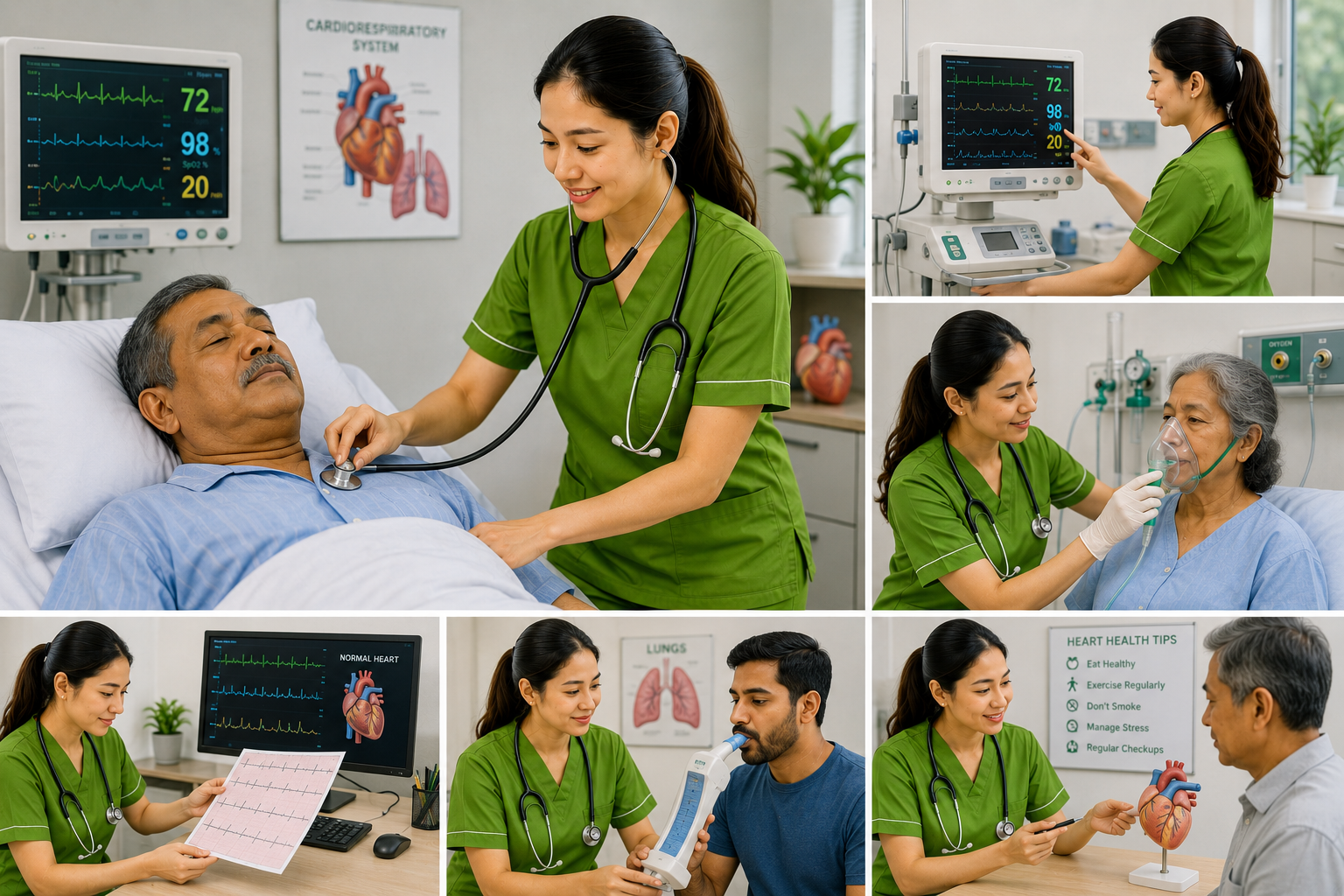
The Cardio-Respiratory Nursing – Online Course is designed to enhance the clinical knowledge and practical skills of nurses in managing patients with cardiovascular and respiratory conditions. This course supports continuous professional development by providing up-to-date, evidence-based practices essential for delivering high-quality care in acute, critical, and community healthcare settings.
Ideal for registered nurses, this program focuses on the assessment, monitoring, and management of common and complex cardio-respiratory disorders, promoting improved patient outcomes and safety. The key topics covered are; comprehensive cardio-respiratory assessment techniques, monitoring and interpretation of vital signs, ECG basics, and oxygen saturation, common cardiovascular conditions (hypertension, coronary artery disease, heart failure), common respiratory conditions (asthma, COPD, pneumonia), oxygen therapy and airway management, Basic Life Support (BLS) and emergency response, medication management in cardio-respiratory care
This flexible, self-paced CPD program enables learners to upgrade their cardio-respiratory nursing competencies at their convenience while earning CPD credits, supporting lifelong learning and improved patient care outcomes.
Ideal for registered nurses, this program focuses on the assessment, monitoring, and management of common and complex cardio-respiratory disorders, promoting improved patient outcomes and safety. The key topics covered are; comprehensive cardio-respiratory assessment techniques, monitoring and interpretation of vital signs, ECG basics, and oxygen saturation, common cardiovascular conditions (hypertension, coronary artery disease, heart failure), common respiratory conditions (asthma, COPD, pneumonia), oxygen therapy and airway management, Basic Life Support (BLS) and emergency response, medication management in cardio-respiratory care
This flexible, self-paced CPD program enables learners to upgrade their cardio-respiratory nursing competencies at their convenience while earning CPD credits, supporting lifelong learning and improved patient care outcomes.
Learning Materials
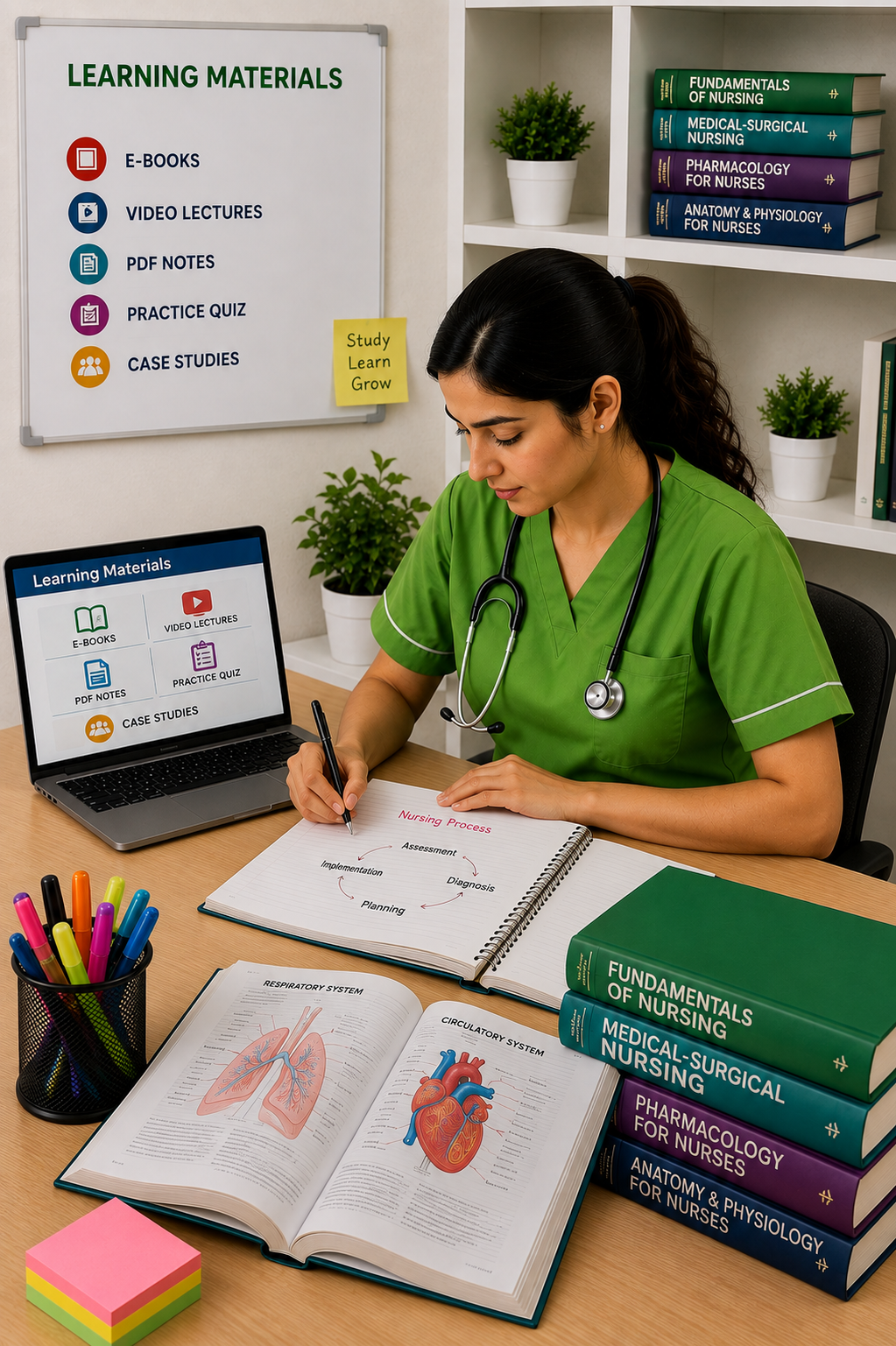
Learning materials for online Continuous Professional Development (CPD) courses are specifically designed to support practicing nurses in updating their knowledge, enhancing clinical skills, and maintaining professional competence in a flexible, accessible format.
These resources typically include comprehensive PDFs and PowerPoint slides developed by experienced nurse educators and clinical experts, focusing on current best practices, evidence-based care, and emerging trends in healthcare. These materials are intended for quick reference and revision, helping nurses reinforce key concepts and apply them effectively in real-world settings.
These resources typically include comprehensive PDFs and PowerPoint slides developed by experienced nurse educators and clinical experts, focusing on current best practices, evidence-based care, and emerging trends in healthcare. These materials are intended for quick reference and revision, helping nurses reinforce key concepts and apply them effectively in real-world settings.
Practice Test
Practice tests for online Continuous Professional Development (CPD) courses are structured self-assessment tools designed to reinforce learning, evaluate knowledge, and enhance clinical decision-making skills.
These practice tests typically consist of multiple-choice questions, case-based scenarios, and application-oriented problems that reflect real-life clinical situations. The questions are aligned with course objectives and current evidence-based nursing practices, ensuring relevance to everyday patient care and professional responsibilities.
Each test is carefully designed to cover key topics such as patient assessment, medication administration, infection control, critical care, and ethical decision-making. Scenario-based questions help nurses apply theoretical knowledge to practical situations, promoting critical thinking and improving clinical judgement.
These practice tests typically consist of multiple-choice questions, case-based scenarios, and application-oriented problems that reflect real-life clinical situations. The questions are aligned with course objectives and current evidence-based nursing practices, ensuring relevance to everyday patient care and professional responsibilities.
Each test is carefully designed to cover key topics such as patient assessment, medication administration, infection control, critical care, and ethical decision-making. Scenario-based questions help nurses apply theoretical knowledge to practical situations, promoting critical thinking and improving clinical judgement.

Score Card
Cardio-Respiratory Nursing
Score
Percentage
Questions
Time taken
Correct Answer
Wrong Answer
Complete the mock test first
To open practice questions, you need to complete the mock test for this module first. After that, you can return here and proceed to practice.